

Scenic Flight Tourism: Routes That Are Destinations
Date Published
Aviation as Experience, Not Just Transport
Commercial aviation is slowly shedding its old skin. Air travel was once framed as a mechanical necessity, a means of shrinking distance between departure and arrival. Today, the sky itself is becoming a destination.
Scenic flight routes represent a subtle but powerful shift in tourism economics. Airlines are no longer only mobility providers but curators of airborne experiences. Passengers increasingly choose routes not only for schedule convenience but for visual theatre unfolding outside the window. In this evolving market, the aircraft cabin becomes a moving observation deck, and the route becomes the product.
South African aviation tourism is particularly suited to this transformation because of the country’s exceptional geography. From rugged mountain profiles to sweeping coastal horizons, the natural scenery lends itself to aerial storytelling.
Airlines that embrace scenic route positioning can unlock premium pricing potential, increase brand differentiation, and cultivate emotional loyalty among travellers who want more than transport.
The Psychology of Flying for Pleasure
Tourism behaviour is rarely rational in the strict economic sense. People purchase experiences wrapped inside services.
When a passenger books a scenic route, the purchase decision is influenced by anticipation as much as by utility. The mind begins the journey before the aircraft leaves the gate. This is especially true for leisure travellers who associate flight with adventure rather than obligation.
The window seat becomes a private cinema screen. Clouds roll like slow-moving oceans. Terrain shifts from urban geometry to wild abstraction. Light behaves differently above the surface of the earth, painting landscapes in transient golds and blues that cannot be replicated on land.
Airlines that communicate this experiential promise are selling atmosphere, not altitude.

Mountain Routes: Flying Along Earth’s Vertical Drama
Mountain scenic routes are among the most emotionally striking forms of commercial aviation tourism.
In South Africa, flights departing from Cape Town offer some of the world’s most recognisable mountain views. The silhouette of Table Mountain is particularly iconic. Its flat summit appears almost artificial from the air, like a stone table set by geological giants.
Mountain routes are visually compelling because they reveal terrain in layers.
At lower altitudes, passengers see urban sprawl and coastal infrastructure. As the aircraft climbs, human structures shrink into architectural whispers, replaced by the raw architecture of rock formations and shadow valleys.
These routes are especially valuable for airlines operating hub connections involving leisure destinations. When marketing mountain scenic flights, the emphasis should be placed on window visibility, aircraft seat design, and predictable flight timing.
Morning mountain flights tend to produce sharper contrast lighting. The sun rises behind peaks, carving geological edges with silver illumination.
Passengers often describe mountain scenic flights as emotionally grounding. There is something strangely calming about watching the earth’s bones rise slowly beneath a moving metal bird.
From a commercial perspective, mountain routes support premium economy upgrades and selective seat pricing strategies. Airlines can create micro-products such as “scenic window guarantees” bundled with early boarding privileges.
Mountain Flight Marketing Themes
Geological storytelling through altitude progression
Cultural significance of landmark peaks
Photography-friendly cabin positioning
Seasonal snow or winter lighting effects where applicable
Educational content about terrain formation
Airlines such as South African Airways have opportunities to highlight domestic scenic corridors linking major tourism nodes.
Coastal Routes: The Blue-Edge Experience
Coastal scenic flights are perhaps the most commercially versatile tourism aviation product.
The ocean offers visual consistency without monotony. Unlike urban or inland landscapes, the sea provides a living mirror that changes colour, texture and emotional tone throughout the day.
Passengers flying along coastal routes witness a slow conversation between land and water. Beaches appear as thin ribbons of pale gold, cliffs emerge like defensive natural castles, and ports resemble mechanical organisms breathing cargo and commerce.
Coastal flights are particularly powerful in countries with elongated shorelines because they allow travellers to mentally map national geography in one continuous visual narrative.
South Africa’s coastline offers exceptional scenic flight potential due to its intersection of warm and cold ocean currents, producing complex colour variation visible from the air.
Why Coastal Flights Drive Repeat Tourism
Coastal routes encourage social sharing behaviour.
Modern travellers frequently document experiences through photography and short video clips. Aircraft windows function as ready-made framing devices.
The visual elements that tend to generate the highest engagement include:
• Curving shoreline geometry
• Contrast between ocean blue and land vegetation
• Harbours with clustered maritime activity
• Morning mist hovering above coastal plains
• Sunlight reflection patterns on water surfaces
From a marketing perspective, coastal scenic flights are natural allies of cruise tourism, seaside hotel chains, and coastal adventure operators.
Airlines can partner with tourism boards to promote flight packages that combine air, land and sea experiences.
Another advantage is demographic flexibility. Coastal scenic routes attract honeymoon travellers, families, photographers, and casual holiday passengers.
Sunset Routes: Flying Inside Golden Time
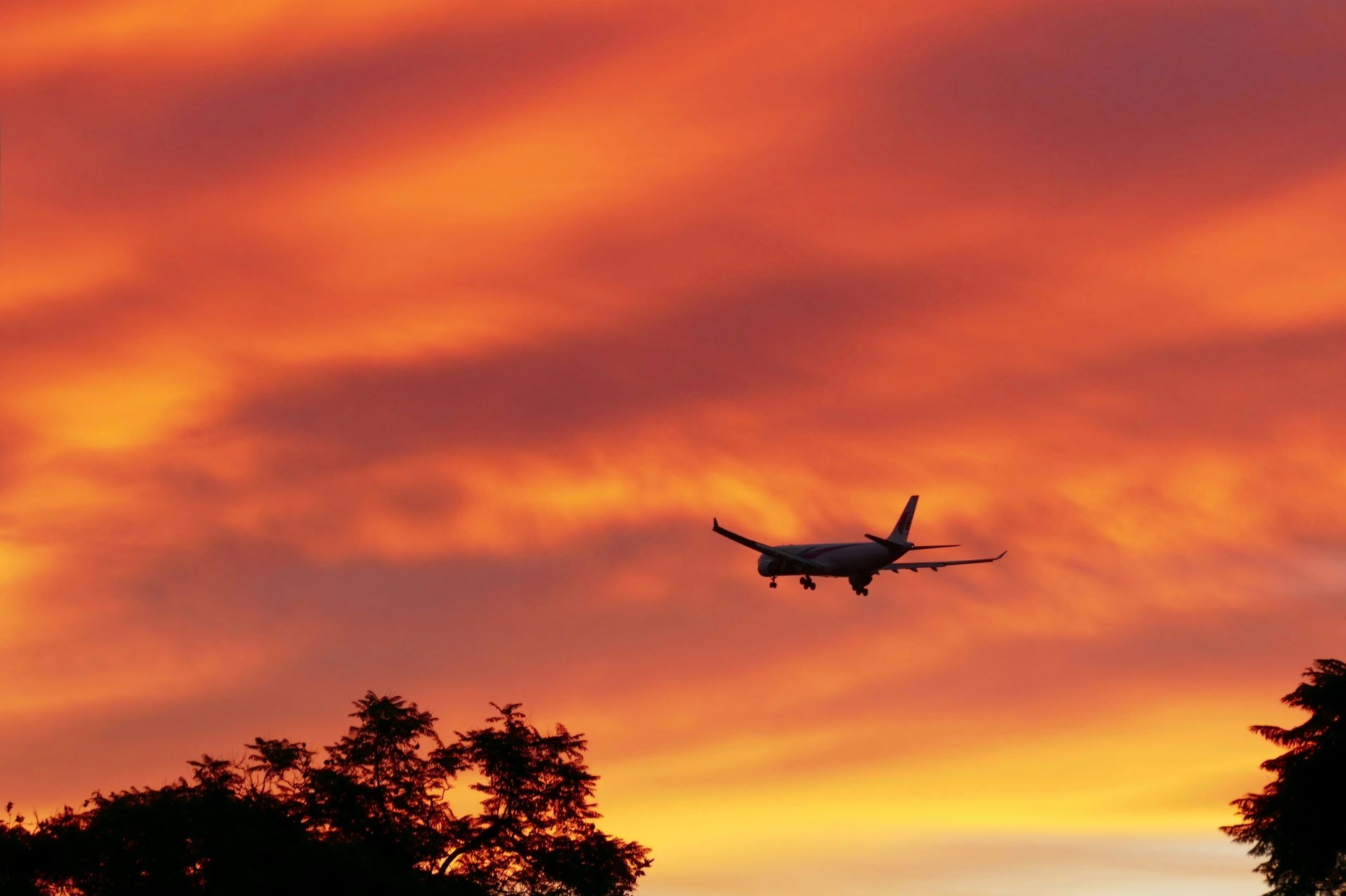
Sunset flights are the poetry division of commercial aviation.
If mountain routes are sculpture and coastal routes are geography, sunset routes are atmosphere itself.
The golden hour transforms aircraft cabins into softly illuminated chambers where conversation slows and attention drifts toward the window. The sun descends like a burning coin sliding quietly behind the horizon line.
These routes are especially valuable for evening leisure flights connecting major urban centres.
Flights scheduled during sunset windows can command premium pricing if marketed as experiential journeys rather than simple transportation.
Passengers are psychologically receptive during transitional light periods. Human cognition tends to associate sunset colours with rest, completion and emotional reflection.
Sunset flights work well when combined with in-flight service enhancements such as curated beverage offerings or quiet cabin zones.
Crafting the Sunset Passenger Experience
Airlines can optimise sunset tourism value by coordinating:
Flight departure timing with solar position data
Window seat prioritisation for premium packages
Light-dimming cabin technology
Announcement minimisation during visual peak moments
Route planning also matters. Westward flight paths generally offer longer sunset visibility periods.
In regions like southern Africa, westbound coastal or inland flights can extend the golden hour experience by aligning aircraft trajectory with the setting sun’s movement.
The business logic is simple: passengers are willing to pay more for time that feels emotionally longer.
Commercial Value for Airlines
Scenic flight routes should not be treated as secondary aesthetic bonuses but as structured tourism products.
Revenue growth can occur through several mechanisms.
First, seat differentiation becomes more meaningful. Window seats on scenic routes can be priced as micro-premium inventory.
Second, airlines can develop route branding similar to hotel branding. Instead of marketing only origin and destination, airlines can market the experience of flying over specific landscapes.
Third, tourism authorities can collaborate with airlines to promote national image-building through aviation.
Domestic tourism markets are particularly responsive to this strategy because scenic flights reduce psychological distance between regions.
Scenic aviation tourism also supports off-peak capacity utilisation. Flights scheduled during traditionally low-demand leisure hours can be repositioned as experience products.
Technology and the Future of Scenic Flight Tourism
Emerging cabin technologies are reshaping how passengers interact with aerial landscapes.
Smart window systems that adjust transparency and contrast may allow better visual clarity at high altitudes.
Augmented reality overlays could eventually provide real-time information about visible terrain. Imagine pointing a seatback screen at a mountain range and receiving historical or geological commentary.
While such technology is still developing, forward-thinking airlines are already experimenting with digital passenger engagement.
The future of commercial aviation tourism may involve hybrid experiences where transportation, entertainment, and education merge inside a single flight.
Sustainability Considerations
Scenic flight tourism must balance experience creation with environmental responsibility.
Airlines promoting scenic routes should invest in fuel efficiency, carbon offset programmes, and operational optimisation.
Public perception increasingly favours tourism products that demonstrate ecological awareness.
Lightweight cabin materials, efficient flight planning, and newer-generation engines all contribute to reducing environmental impact.
Tourists themselves are becoming more conscious of sustainable travel narratives.
Integration with Broader Tourism Ecosystems
Scenic aviation tourism works best when integrated into regional travel networks.
For example, a passenger might begin with a mountain scenic flight, continue with coastal accommodation, and end with sunset aerial photography sessions.
Travel agencies, hotel groups, and local tour operators can collaborate with airlines to build multi-layered tourism packages.
Digital marketing platforms are essential in communicating these bundled experiences.
Short-form video advertising, social media storytelling, and influencer partnerships are particularly effective in reaching younger travel demographics.
Challenges Facing Scenic Flight Tourism
Despite its promise, scenic flight tourism faces several operational challenges.
Weather variability is the primary constraint. Cloud cover can obscure visual landscapes, reducing experience quality.
Pricing sensitivity is another concern. Passengers may hesitate to pay premium fares unless the experience promise is clearly communicated.
Route scheduling also requires precision. Scenic flights that fail to deliver expected visual conditions may damage brand trust.
Airlines must therefore manage passenger expectations through transparent marketing and flexible booking policies.

The Emotional Economy of Flying
The future of tourism is emotional rather than purely functional.
People travel not only to arrive somewhere but to feel something along the way. Scenic flight routes speak directly to this emotional economy.
The quiet wonder of watching land dissolve into ocean, or mountains rise from shadow into sunlight, taps into a primal human fascination with perspective.
Commercial aviation, once a symbol of speed and efficiency, is gradually becoming a stage where geography performs itself in moving light.
Scenic flight routes represent one of the most underutilised opportunities in commercial airline tourism.
Mountain vistas, coastal horizons and sunset corridors transform transportation into narrative experience. For airlines willing to think beyond logistics, the sky is no longer merely a path between destinations but a tourism product in its own right.
As traveller expectations evolve, aviation brands that learn to sell atmosphere alongside seats will find themselves flying not just passengers, but memories.